Ever noticed a cat with a coat that looks like it’s been styled by a professional? Welcome to the fascinating world of curly-haired cats! These unique felines aren’t just adorable; their coats are a result of intriguing genetics and have led to the development of several distinct breeds. From the iconic Devon Rex to the gentle LaPerm, we’ll dive deep into what makes these cats so special, covering everything from their origins and personalities to grooming tips and potential health concerns.
Get ready to discover a whole new level of feline fabulousness!

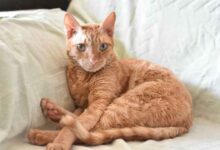
The curly coat isn’t just a visual quirk; it’s a genetic marvel. It stems from mutations affecting hair follicle structure, leading to the characteristic curls or waves. Understanding these genetic factors is key to appreciating the differences between breeds like the Devon Rex and Cornish Rex, both known for their curly coats but with subtle variations in texture and density.
We’ll also explore the “poodle cat,” the Selkirk Rex, and other breeds showcasing this captivating trait.
Curly-Haired Cats: A Comprehensive Guide to Breeds, Care, and Genetics
The world of feline beauty is vast and varied, and among the most captivating are cats with curly coats. These aren’t just fluffy felines; their unique textures and appearances set them apart. This guide dives deep into the world of curly-haired cats, exploring the breeds that boast this distinctive trait, the genetics behind it, the specific care they require, and potential health considerations.
Whether you’re a seasoned cat lover or considering welcoming a curly-haired companion into your home, this article will provide you with the knowledge you need.
Defining “curly hair” in cats goes beyond simply having a wavy or fluffy coat. True curly hair is characterized by a consistent, tight curl pattern across the entire body, often resembling wool or even a poodle’s coat. Wavy coats have a looser, more undulating pattern, while fluffy coats are generally soft and voluminous but lack the distinct curl. The genetic basis for this trait is complex, involving multiple genes that influence hair follicle shape and keratin production.
While the exact genes responsible are still being researched, it’s understood that mutations affecting these processes lead to the formation of curly hair. Several breeds have independently developed these mutations, resulting in the diverse range of curly-haired cats we see today. These include the Devon Rex, Cornish Rex, Selkirk Rex, American Curl, and LaPerm, each with its own unique characteristics.
Devon Rex: The Iconic Curly-Haired Breed
The Devon Rex is arguably the most recognizable curly-haired cat breed. Beyond its signature coat, the Devon Rex possesses a distinctive appearance. Their head is often described as having a “pixie” or “elf-like” quality, with large, low-set ears that are wide at the base and pointed at the tips. Their body is slender and muscular, with long legs and delicate paws.
Their eyes are typically large and expressive, contributing to their overall charming appearance. Devon Rex cats are known for their playful, mischievous, and affectionate personalities. They are highly intelligent and enjoy interactive games and puzzles. They are often described as being “dog-like” in their loyalty and desire for human companionship, frequently following their owners around and seeking attention. Grooming a Devon Rex’s curly coat is relatively straightforward, requiring weekly brushing to prevent matting and tangles.
Bathing is typically only needed a few times a year, unless the cat gets particularly dirty.
| Coat Type | Description | Visual Characteristics |
|---|---|---|
| Tight Curls | The coat forms very tight, springy curls all over the body. | Resembles a tightly wound wool or sheep’s fleece. |
| Loose Waves | The curls are less defined, resulting in a wavy or rippled appearance. | The coat has a softer, more flowing look. |
| Curly Fringe | The coat is curly around the face and ears, creating a distinctive fringe. | Gives the cat a unique, almost comical expression. |
Cornish Rex: A Close Relative with Distinct Differences
While closely related to the Devon Rex, the Cornish Rex possesses a distinctly different coat and overall appearance. The Cornish Rex’s coat is noticeably shorter, softer, and denser than the Devon Rex’s. It lacks an undercoat entirely, resulting in a uniquely velvety texture. The Cornish Rex’s head is more wedge-shaped than the Devon Rex’s, and their ears are slightly smaller.
Historically, the Cornish Rex originated in Cornwall, England, in 1950, from a barn cat named Kallibunker. The mutation responsible for the curly coat was identified and selectively bred, establishing the breed. Cornish Rex cats are known for their high energy levels and playful nature. They are incredibly agile and enjoy climbing, jumping, and chasing toys. They are also very affectionate and bond strongly with their families.
- Pros of Owning a Cornish Rex:
- Affectionate and playful companions.
- Relatively low-shedding due to lack of undercoat.
- Intelligent and trainable.
- Unique and striking appearance.
- Cons of Owning a Cornish Rex:
- Require frequent grooming to prevent skin issues.
- Sensitive to cold due to lack of undercoat.
- High energy levels may require significant playtime and enrichment.
- Can be prone to certain health issues (see section 9).
Selkirk Rex: The “Poodle Cat”
The Selkirk Rex has earned the nickname “poodle cat” due to its resemblance to a poodle’s curly coat. This breed’s curls are a result of a dominant gene mutation that affects hair follicle development. The Selkirk Rex exhibits a variety of curl types, ranging from loose, gentle waves to tight, plush curls. The degree of curl can vary significantly even within the same litter.
The Selkirk Rex’s temperament is generally described as gentle, affectionate, and laid-back. They are known for their tolerant and adaptable nature, making them well-suited for families with children and other pets. Identifying a Selkirk Rex kitten with the potential for a strong curl involves examining the coat at a young age. Kittens with tighter curls are more likely to retain that curl as adults, although the curl can loosen slightly with age.
Look for a coat that is noticeably curly even in early kittenhood, rather than just fluffy or wavy.
American Curl: Curly Ears and a Unique Coat
The American Curl is instantly recognizable by its defining feature: its curled ears. This unique trait arose from a spontaneous genetic mutation in a barn cat in California in the 1980s. The curl in the ears is caused by a cartilage defect that affects the ear’s shape. Interestingly, the American Curl’s coat itself is not inherently curly; it can be short, medium, or long-haired and come in a variety of colors and patterns.
However, the overall appearance is enhanced by the distinctive curled ears. American Curls are known for their sweet, gentle, and adaptable personalities. They are often described as being “easygoing” and enjoy being around people. Health considerations for American Curls are generally minimal, but it’s important to monitor their ears for any signs of infection or irritation. The degree of ear curl develops gradually, starting as a slight curve in kittens and becoming more pronounced as they mature.
Around 8-10 weeks, the curl becomes more defined, and by 1-2 years, the ears typically reach their full curl potential.
LaPerm: A Gentle Giant with a Curly Charm
The LaPerm’s history is a charming tale of accidental discovery. The first LaPerm, a barn cat named Curly Sue, was born in Oregon in 1984. Curly Sue’s kittens unexpectedly inherited her curly coat, marking the beginning of the breed. The LaPerm’s coat variations are quite diverse, ranging from tight, ringlet-like curls to loose, flowing waves. Some LaPerms even have a combination of both curl types.
The LaPerm is known for its affectionate and laid-back nature. They are often described as being “velcro cats” due to their tendency to stick close to their owners. They are generally quiet and gentle, making them excellent companions for families and individuals alike.
“My LaPerm, Leo, is the sweetest cat I’ve ever known. He loves to cuddle and purrs constantly. His curly coat is so soft and luxurious, and he’s always ready for a nap on my lap!”
Sarah M.
Genetic Considerations and Breeding
The inheritance patterns of curly hair genes in cats are complex and not fully understood. However, it’s generally believed that the genes responsible for curly hair are dominant, meaning that a cat only needs to inherit one copy of the gene from either parent to exhibit the trait. Breeding curly-haired cats raises ethical considerations, particularly regarding the potential for health problems.
Breeding for specific traits can inadvertently increase the risk of genetic disorders. Responsible breeders prioritize the health and well-being of their cats above all else, conducting genetic testing and carefully selecting breeding pairs to minimize these risks. Predicting the genetic outcomes of breeding two curly-haired cats can be complex. The following flowchart illustrates some possible scenarios:
| Parent 1 Genotype | Parent 2 Genotype | Possible Offspring Genotypes | Probability |
|---|---|---|---|
| Cc | Cc | CC, Cc, cc | 25%, 50%, 25% |
| Cc | cc | Cc, cc | 50%, 50% |
| CC | cc | Cc | 100% |
(Where ‘C’ represents the dominant curly hair gene and ‘c’ represents the recessive non-curly hair gene)
Grooming and Coat Care for Curly-Haired Cats
Grooming curly-haired cats requires a slightly different approach than grooming cats with straight coats. Regular brushing, ideally several times a week, is essential to prevent matting and tangles. Use a wide-toothed comb or a slicker brush designed for curly hair. When bathing, use a shampoo and conditioner specifically formulated for cats with curly or sensitive skin. These products will help to moisturize the coat and prevent dryness.
Regular bathing, typically every 4-6 weeks, is recommended to keep the coat clean and healthy. Managing shedding in curly-haired breeds can be challenging, as the curls can trap loose hair. Regular brushing and bathing can help to minimize shedding, but some shedding is inevitable.
Health Concerns Specific to Curly-Haired Breeds
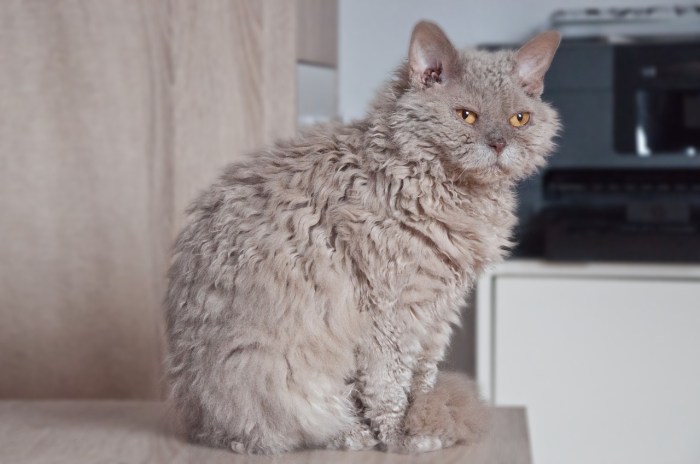
Source: catster.com
Certain health concerns are more prevalent in specific curly-haired breeds. Devon Rex cats are prone to hypertrophic cardiomyopathy (HCM), a heart condition. Cornish Rex cats can be susceptible to skin allergies and respiratory issues due to their lack of undercoat. Selkirk Rex cats may experience hip dysplasia. American Curls require monitoring for ear infections and inflammation.
LaPerms are generally healthy, but breeders should screen for genetic disorders. Preventative measures include regular veterinary checkups, a balanced diet, and a stimulating environment. A table summarizing common health concerns, symptoms, and potential treatments is provided below:
| Health Concern | Symptoms | Potential Treatments |
|---|---|---|
| HCM (Devon Rex) | Difficulty breathing, lethargy, sudden death | Medication, surgery |
| Skin Allergies (Cornish Rex) | Itching, redness, hair loss | Dietary changes, medication |
| Hip Dysplasia (Selkirk Rex) | Lameness, pain | Medication, surgery |
| Ear Infections (American Curl) | Head shaking, discharge, pain | Antibiotics, ear cleaning |
Finding a Reputable Breeder
Choosing a responsible breeder is crucial when acquiring a curly-haired cat. A reputable breeder will prioritize the health and temperament of their cats above all else. They will be knowledgeable about the breed’s history, genetics, and potential health concerns. Ask the breeder about health testing performed on their breeding cats, their socialization practices, and their guarantees. Red flags to watch out for include breeders who are unwilling to answer questions, who keep their cats in unsanitary conditions, or who are primarily motivated by profit.
A checklist for evaluating a breeder’s facilities and practices includes:
- The breeder allows you to visit their cattery.
- The cats appear healthy and well-cared for.
- The breeder provides health records for their cats.
- The breeder is knowledgeable about the breed.
- The breeder is willing to answer your questions.
- The breeder provides a contract with health guarantees.
Last Point
So, there you have it – a comprehensive look at the captivating world of curly hair cats breeds! Whether you’re a seasoned cat lover or just starting your feline journey, these breeds offer a unique blend of charm, personality, and distinctive beauty. From understanding the genetic intricacies to providing proper care, we’ve covered the essentials to help you appreciate and potentially welcome one of these curly companions into your life.
Remember, responsible breeding and attentive care are paramount to ensuring the health and happiness of these special felines.
Ultimately, owning a curly-haired cat is a rewarding experience. Their playful nature, affectionate personalities, and undeniably stylish coats make them truly unforgettable members of the family. Hopefully, this guide has sparked your curiosity and given you a deeper understanding of these remarkable breeds.
Expert Answers
Do curly-haired cats shed less than other breeds?
While they often shed less, it’s not a guarantee. Shedding varies depending on the breed and individual cat. Regular grooming helps minimize shedding regardless of coat type.
Are curly-haired cats hypoallergenic?
No, no cat breed is truly hypoallergenic. However, some people with allergies find that they react less to curly-haired cats due to their coat’s unique texture, which may trap dander differently.
What’s the best diet for a curly-haired cat?
A high-quality diet rich in protein and essential fatty acids is crucial for maintaining a healthy coat. Consult with your veterinarian for specific dietary recommendations.
How often should I bathe my curly-haired cat?
Bathing frequency depends on the breed and lifestyle. Generally, every 2-4 weeks is sufficient, but some cats may need more frequent baths to prevent matting.
What are some common health problems in Devon Rex cats?
Devon Rex cats are prone to certain health issues like luxating patellas (dislocating kneecaps) and hypertrophic cardiomyopathy (HCM). Regular vet checkups are essential for early detection and management.
How can I tell if a Selkirk Rex kitten will have tight curls?
Kittens with tighter curls tend to show more curl even at a young age. However, curl development can continue into adulthood, so it’s not always immediately apparent.

