Those adorable, flattened faces on certain cat breeds – Persians, Exotic Shorthairs, and Himalayans – are undeniably charming, but they come with a complex story. We’re diving deep into the world of the “smushed face” in cats, exploring the genetics, health concerns, and ethical considerations surrounding this unique facial structure. It’s more than just a cute look; it’s a fascinating intersection of breeding history, feline health, and responsible pet ownership.
From the historical evolution of these features to the daily care requirements, we’ll unpack everything you need to know about these special cats. We’ll also touch on the controversies surrounding breeding practices and how breeders can work towards healthier, happier “smushed face” felines. Get ready for a journey into the world of flattened noses and endearing expressions!

Understanding the Allure and Challenges of “Smushed Face” Cats
The distinctive, flattened faces of certain cat breeds have captivated cat lovers for decades. While undeniably charming to many, this unique appearance comes with a complex set of health considerations that responsible owners and breeders need to understand. This article delves into the world of “smushed face” cats, exploring their genetics, health concerns, care requirements, and the ethical considerations surrounding their breeding.
We’ll navigate the nuances of this fascinating, and sometimes controversial, aspect of feline beauty.
Defining “Smushed Face” in Cats
The term “smushed face,” while informal, refers to a specific set of physical characteristics resulting from brachycephaly – a shortened skull. It’s more than just a cute, squished nose; it’s a complex alteration of the facial structure that impacts breathing, eye health, and overall well-being. The degree of “smush” varies significantly between breeds and even within individual cats of the same breed.Here’s a breakdown of common characteristics:* Shortened Nose: A significantly reduced nasal length, often with a “pushed-in” appearance.
Wide Head
A broader skull compared to typical feline proportions.
Large, Round Eyes
Often prominent and set wide apart.
Flattened Face Profile
A less defined curve from the forehead to the nose.
Increased Skin Folds
More pronounced folds of skin around the nose and mouth.The following table Artikels breeds known for exhibiting “smushed face” characteristics, along with variations in severity and associated health concerns.
| Breed | Description of Facial Features | Common Health Concerns |
|---|---|---|
| Persian | Extremely flattened face, short nose, large round eyes, abundant facial folds. Severity ranges from moderate to very extreme. | BOAS, corneal ulcers, entropion, dental problems, skin fold dermatitis. |
| Exotic Shorthair | Similar to Persians but with short, dense fur. Facial features are generally less extreme than Persians. | BOAS, corneal ulcers, dental problems, skin fold dermatitis (less severe than Persians). |
| Himalayan | Combines the Persian’s facial structure with the Siamese’s colorpoint pattern. Facial features are typically less extreme than Persians. | BOAS, corneal ulcers, dental problems, skin fold dermatitis. |
| British Shorthair | Round face with a slightly shortened nose, but less extreme than Persian breeds. | Dental problems, potential for BOAS (less common). |
| Scottish Fold | While known for folded ears, some lines exhibit a slightly flattened face. | BOAS, dental problems, joint issues (related to the folded ear gene). |
The development of these flattened facial features is primarily driven by genetic mutations affecting bone growth and development. Selective breeding over generations has amplified these traits, prioritizing aesthetics over health in some cases. The colloquial use of “smushed face” is generally descriptive, referring to the appearance. In veterinary and breeding contexts, it’s often used to describe the degree of brachycephaly and its potential impact on health.
Popular Breeds with “Smushed Face” Characteristics
The Persian breed stands as the quintessential example of a “smushed face” cat. Its history is intertwined with the evolution of this facial structure. Originally, Persians had longer noses and more moderate facial features. During the 19th century, breeders began selectively breeding for increasingly flattened faces, believing it enhanced the breed’s appeal. This process intensified over time, resulting in the extreme facial conformation seen in many modern Persians.The Exotic Shorthair was developed in the 1950s and 1960s as an attempt to replicate the Persian’s facial features in a low-maintenance coat.
They are essentially Persians with short fur. Their facial features are generally less extreme than Persians, but they still share many of the same characteristics, including a shortened nose and wide head.The Himalayan breed is a cross between Persians and Siamese, combining the Persian’s facial structure with the Siamese’s colorpoint pattern. Their facial conformation tends to be less extreme than Persians, but they still exhibit a degree of brachycephaly.Beyond these well-known breeds, several less common breeds also display flattened facial features:* Selkirk Rex: Some lines exhibit a slightly flattened face due to the Rex gene affecting fur and facial structure.
Burmese
While not as extreme as Persians, some Burmese cats have a slightly shortened nose and round face.
Exotic Longhair
A longer-haired version of the Exotic Shorthair, sharing similar facial characteristics.
Japanese Bobtail (some lines)
Certain lines of Japanese Bobtails can have a slightly flattened face and a shortened nose.
Health Concerns Related to Facial Structure
The very features that make “smushed face” cats appealing can also lead to a range of health problems. The most significant concern is Brachycephalic Obstructive Airway Syndrome (BOAS), a condition characterized by narrowed or obstructed airways. This is due to the shortened skull and altered facial anatomy. Symptoms include noisy breathing, difficulty breathing, exercise intolerance, and heat sensitivity.Eye problems are also common.
The shallow eye sockets and altered facial structure can lead to excessive tearing (epiphora), corneal ulcers (due to dryness and inability to blink properly), and entropion (inward rolling of the eyelids).Dental problems are prevalent due to overcrowding of teeth and malocclusion (misalignment of the jaws). This can lead to gingivitis, periodontal disease, and tooth loss.Skin fold infections are another concern, particularly in Persians.
The folds of skin around the nose and mouth can trap moisture and debris, creating a breeding ground for bacteria and yeast.
Preventative Measures for Skin Fold Infections: Regularly clean facial folds with a damp cloth or pet wipes specifically designed for sensitive skin. Ensure the cat is thoroughly dried after cleaning. Consider using a mild antiseptic solution as directed by a veterinarian.
Caring for Cats with “Smushed Face” Features
Daily grooming is essential for “smushed face” cats. Facial cleaning should be a routine part of their care. Use a soft, damp cloth to gently wipe away any discharge or debris from the eyes and nose. Pay particular attention to cleaning the facial folds to prevent infections.Feeding strategies should be designed to minimize the risk of aspiration (inhaling food into the lungs) and esophageal issues.
Elevated food bowls can help, and wet food is often easier to swallow than dry kibble. Smaller, more frequent meals may also be beneficial.Monitoring breathing is crucial. Learn to recognize early signs of respiratory distress, such as increased respiratory rate, labored breathing, and blue-tinged gums. Contact a veterinarian immediately if you notice any of these signs.Environmental adjustments can significantly improve comfort.
Maintain a moderate temperature and humidity level. Avoid exposing these cats to extreme heat or cold. Provide plenty of fresh water and a quiet, comfortable resting place.
Breeding Considerations and Ethical Concerns
Breeders have a responsibility to prioritize health over aesthetics when breeding “smushed face” cats. This means selecting breeding pairs with healthier conformations and avoiding breeding cats with severe respiratory problems or other health issues.Efforts are underway to improve breed standards and promote healthier conformations. Some breed associations are beginning to discourage extreme facial features and encourage breeders to prioritize breathing and overall health.Genetic testing holds promise for identifying and reducing the prevalence of problematic traits.
While currently limited, advancements in genetic research may eventually allow breeders to screen for genes associated with brachycephaly-related health problems.
| Philosophy | Description | Potential Benefits | Potential Risks |
|---|---|---|---|
| Extreme Conformation | Prioritizes the most exaggerated “smushed” facial features, often disregarding health concerns. | May appeal to some buyers who prefer the most extreme appearance. | High risk of BOAS, eye problems, dental issues, and other health complications. |
| Moderate Conformation | Aims for a balance between aesthetics and health, selecting for facial features that are appealing but not excessively flattened. | Reduced risk of health problems compared to extreme conformation. | May not satisfy buyers who prefer the most extreme appearance. |
| Health-Focused Breeding | Prioritizes health above all else, selecting breeding pairs with the healthiest conformations and screening for genetic predispositions to health problems. | Lowest risk of health problems. | May result in cats with less extreme facial features. |
Visual Descriptions of Facial Variations
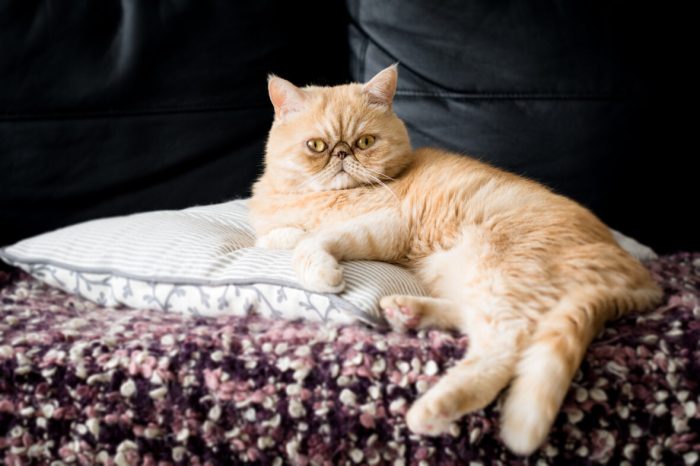
Imagine a Persian cat with a very extreme “smush.” Its nose is almost non-existent, a mere bump on its face. The eyes are incredibly large and round, bulging slightly from the shallow sockets. Deep, prominent skin folds run across its forehead and around its nose and mouth, creating a perpetually wrinkled appearance. The head is exceptionally wide, and the overall impression is one of extreme flatness.An Exotic Shorthair with a moderate “smush” exhibits a shorter nose than a typical cat, but it’s still discernible.
The eyes are large and round, but not as bulging as in the extreme Persian example. Facial folds are present but less pronounced. The head is wider than average, but not excessively so.A Himalayan with a less pronounced “smush” has a slightly shortened nose and a round face, but the features are more balanced and harmonious. The eyes are large and expressive, but not overly prominent.
Facial folds are minimal.Consider a hypothetical new breed, the “Luna,” with a unique “smushed face” conformation. The Luna has a very short, upturned nose and large, forward-facing eyes that give it an almost perpetually surprised expression. Its head is unusually round, and its ears are set low on the head. Potential health challenges could include severe BOAS, corneal ulcers due to the upturned nose obstructing tear drainage, and dental problems due to overcrowding.
Historical Perspective on Breed Development
Source: chipchick.com
The preference for flattened faces in certain feline breeds is a relatively recent phenomenon, largely driven by human intervention. Early Persians likely had longer noses and more moderate facial features. The deliberate selection for shorter noses and wider heads began in the 19th century, fueled by a desire for a more “exotic” and “appealing” appearance.Cat shows and breed standards played a significant role in shaping the appearance of these breeds.
Breed standards often rewarded cats with the most extreme facial features, encouraging breeders to continue selecting for these traits.Historical breeding practices, characterized by a focus on aesthetics over health, contributed to the development of extreme facial features. The pursuit of the “perfect” “smushed face” often came at the expense of the cats’ well-being.
Comparing “Smushed Face” Cats to Other Breeds
A Persian’s facial structure contrasts sharply with a Siamese. The Persian has a shortened nose, wide head, and shallow eye sockets, while the Siamese has a long, wedge-shaped head, a pointed nose, and almond-shaped eyes. The bone structure is fundamentally different.”Smushed face” cats face unique respiratory challenges due to their constricted airways. While long-haired breeds without flattened faces can experience breathing difficulties, the severity is generally less than that seen in brachycephalic cats.Grooming requirements differ significantly.
“Smushed face” cats require meticulous facial cleaning to prevent skin fold infections, while breeds with short, sleek coats typically require minimal grooming.Compared to breeds like Maine Coons, known for hypertrophic cardiomyopathy (HCM), “smushed face” cats face different genetic predispositions. Maine Coons are prone to heart disease, while “smushed face” cats are more susceptible to respiratory, eye, and dental problems.
The Impact of Facial Structure on Behavior
A cat’s facial structure can subtly influence its ability to communicate through facial expressions. The flattened face and limited range of motion can restrict the cat’s ability to convey emotions through subtle facial cues.Cats with flattened faces may exhibit behavioral differences, such as increased irritability or anxiety, potentially stemming from breathing difficulties or discomfort.Breathing difficulties can significantly affect a cat’s overall mood and behavior, leading to lethargy, decreased appetite, and increased vocalization.Altered sensory perception, due to facial conformation, can impact a cat’s interactions with its environment.
For example, the flattened nose may affect their sense of smell, while the shallow eye sockets can impair their vision.
Illustrative Descriptions of “Smushed Face” Features
The nose of a breed with a “smushed face,” like a Persian, is typically short, broad, and flattened. It often appears as a mere bump on the face, with minimal nasal bridge.The eyes are large, round, and prominent, often bulging slightly from the shallow eye sockets. The amount of exposed sclera (the white part of the eye) can be increased, giving the cat a wide-eyed appearance.The mouth and jawline are often shortened and compressed, leading to overcrowding of teeth and malocclusion.The overall head shape is round and wide, contributing to the “smushed face” appearance.
From the side profile, the head exhibits a gentle curve from the forehead to the nose, lacking the sharp angles seen in breeds with more typical facial structures.
Concluding Remarks
Ultimately, understanding the “smushed face” in cats requires a balanced perspective. While these breeds are beloved for their unique appearance, it’s crucial to acknowledge and address the potential health challenges they face. By being informed owners and supporting responsible breeding practices, we can ensure these adorable cats live long, comfortable, and fulfilling lives. Let’s continue to advocate for feline well-being and celebrate the beauty of all cat breeds, while prioritizing their health and happiness above all else.
Question & Answer Hub
Why are some cat breeds born with “smushed” faces?
It’s primarily due to selective breeding over generations, where breeders favored flatter faces. Genetic mutations and inherited traits contribute to this characteristic.
What is BOAS and how does it affect “smushed face” cats?
Brachycephalic Obstructive Airway Syndrome (BOAS) is a respiratory condition common in flattened-faced breeds. It’s caused by narrowed airways, leading to breathing difficulties, especially during exercise or stress.
What are the biggest eye problems these cats face?
Excessive tearing (epiphora), corneal ulcers, and proptosis (eye popping out) are common due to the altered facial structure and shallow eye sockets.
How can I prevent skin fold infections?
Regularly clean and dry the skin folds around the face with a damp cloth. Pay special attention to areas prone to moisture buildup. Consult your vet for appropriate cleaning solutions.
What’s the difference between a Persian and an Exotic Shorthair?
Both have “smushed” faces, but Persians have long, flowing fur, while Exotic Shorthairs have short, dense coats. The facial structure is very similar, though.
Should I avoid getting a “smushed face” cat due to health concerns?
Not necessarily! With proper care, a knowledgeable breeder, and regular vet checkups, many “smushed face” cats can live happy and healthy lives. Research and choose carefully.