Losing a cat is a uniquely heartbreaking experience – the worry, the searching, the uncertainty. Thankfully, technology has stepped in to offer peace of mind. Cat trackers have evolved dramatically, moving from simple ID tags to sophisticated GPS devices, and the demand for reliable pet monitoring is soaring. Recent statistics show that millions of pets go missing each year, highlighting the emotional toll on owners and the growing need for effective tracking solutions.
Let’s explore the world of cat trackers, comparing methods and finding the best fit for your feline companion.
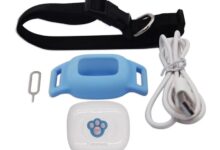
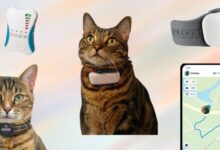

Historically, pet owners relied on microchips and ID tags, which are still valuable for identification if a cat is found. However, these methods don’t actively help locate a lost cat. Modern GPS trackers offer real-time location data, providing a significant advantage. Here’s a quick comparison:
| Method | Description |
|---|---|
| Microchip | Permanent ID implanted under the skin; requires a vet or shelter scan to identify. |
| ID Tag | Attached to a collar; provides contact information for quick identification. |
| GPS Tracker | Uses satellite technology to pinpoint a cat’s location; often includes features like geofencing and activity monitoring. |
Introduction: The Growing Need for Cat Trackers
Let’s face it, cats are curious creatures. They love exploring, and while that’s part of their charm, it can also lead to some serious anxiety for their owners. More and more people are realizing that simply letting their cat roam free isn’t always the best idea, and they’re looking for ways to ensure their furry friend’s safety. The peace of mind that comes with knowing where your cat is, especially if they’re prone to wandering, is invaluable.
The statistics paint a concerning picture. According to the American Veterinary Medical Association, approximately 10 million pets get lost or stolen each year in the United States alone. Cats, often underestimated in their ability to escape, account for a significant portion of these losses. The emotional toll on owners is immense – the worry, the sleepless nights, the constant searching.
Losing a pet is a deeply painful experience, and anything that can reduce that risk is worth considering.
Cat tracking technology has come a long way. Remember the days of just relying on a simple collar with an ID tag? While those are still important, they’re no longer the only option. We’ve moved from basic identification to sophisticated GPS devices that can pinpoint a cat’s location in real-time. The evolution reflects a growing understanding of feline behavior and a desire to provide better protection for our beloved companions.
| Method | Description |
|---|---|
| Microchip | A small, electronic chip implanted under the cat’s skin. It contains a unique identification number that can be read by a scanner at shelters and veterinary clinics. Doesn’t track location, but helps reunite lost cats with their owners. |
| ID Tag | A tag attached to the cat’s collar with contact information. A simple and inexpensive way to increase the chances of a cat being returned if found. |
| GPS Tracker | A device that uses the Global Positioning System to determine the cat’s location. Provides real-time tracking and historical data, often with additional features like geofencing and activity monitoring. |
Types of Cat Trackers: A Comprehensive Overview
Choosing the right cat tracker involves understanding the different technologies that power them. Each technology has its strengths and weaknesses, impacting accuracy, range, battery life, and ultimately, the cost. Let’s break down the most common types: GPS, Bluetooth, Wi-Fi, and Cellular.
GPS (Global Positioning System) trackers rely on a network of satellites to determine a cat’s location. They’re generally the most accurate, especially in open areas. Bluetooth trackers use short-range radio waves to connect to a smartphone. Wi-Fi trackers connect to nearby Wi-Fi networks, extending their range beyond Bluetooth but requiring access to Wi-Fi hotspots. Cellular trackers use mobile networks (like your phone) to transmit location data, offering the widest range but also requiring a subscription plan.
| Technology | Pros | Cons |
|---|---|---|
| GPS | High accuracy, works in remote areas | Higher cost, shorter battery life, can be affected by dense foliage |
| Bluetooth | Low cost, long battery life | Limited range (typically 30-100 feet), requires smartphone proximity |
| Wi-Fi | Longer range than Bluetooth, no subscription fees (if using existing Wi-Fi) | Relies on Wi-Fi availability, less accurate than GPS |
| Cellular | Widest range, real-time tracking | Requires a subscription plan, higher cost, battery life can be shorter |
To illustrate how GPS trackers work, imagine this: The tracker receives signals from multiple GPS satellites orbiting the Earth. The tracker’s internal chip calculates the distance to each satellite based on the time it takes for the signal to arrive. By knowing the distance to at least four satellites, the tracker can pinpoint its location on Earth using a process called trilateration.
This data is then transmitted to your smartphone via Bluetooth or cellular connection.
Many trackers offer both real-time tracking and historical data recording. Real-time tracking shows the cat’s current location, while historical data allows you to review their movements over a specific period. This can be incredibly useful for understanding their roaming habits and identifying potential hazards.
Top Cat Trackers: Feature Comparison & Performance
The market for cat trackers is growing rapidly, with numerous brands and models vying for attention. Choosing the best one depends on your cat’s lifestyle and your budget. Here are five leading options, compared based on key features.
Durability is paramount, especially for outdoor cats. Look for trackers with weatherproof and rugged designs that can withstand scratches, impacts, and exposure to the elements. A small, lightweight tracker is also crucial for a cat’s comfort, preventing irritation and restricting their movement.
| Tracker Name | GPS Accuracy | Battery Life | Price |
|---|---|---|---|
| Tractive GPS Cat | Within 5 meters | Up to 4 days | $70 – $100 (plus subscription) |
| Whistle GO Explore | Within 4 meters | Up to 10 days | $80 – $120 (plus subscription) |
| Fi Smart Collar | Within 10 meters | Up to 30 days | $130 – $160 (plus subscription) |
| Link AKC Smart Collar | Within 5 meters | Up to 3 days | $150 – $200 (plus subscription) |
| Pawfit 3 | Within 5 meters | Up to 7 days | $60 – $90 (plus subscription) |
Beyond the basics, consider app functionality. A user-friendly app with features like geofencing, activity monitoring, and customizable notifications can significantly enhance the tracking experience.
GPS vs. Bluetooth vs. Wi-Fi Trackers: Which is Best for Your Cat?
The choice between GPS, Bluetooth, and Wi-Fi trackers hinges on your cat’s habits and your priorities. GPS trackers offer the widest range and best accuracy, making them ideal for roaming cats who venture far from home. Bluetooth trackers are best suited for indoor cats or those who primarily stay within a small area, offering long battery life and a low cost.
Wi-Fi trackers provide a middle ground, extending the range beyond Bluetooth but relying on the availability of Wi-Fi networks. They’re a good option if your cat spends time in areas with reliable Wi-Fi coverage. Cellular trackers, while offering the most extensive range, come with ongoing subscription costs.
- GPS: Advantages – Wide range, high accuracy. Disadvantages – Shorter battery life, higher cost. Best for: Outdoor cats, escape artists.
- Bluetooth: Advantages – Long battery life, low cost. Disadvantages – Limited range, requires smartphone proximity. Best for: Indoor cats, cats with limited outdoor access.
- Wi-Fi: Advantages – Longer range than Bluetooth, no subscription fees (if using existing Wi-Fi). Disadvantages – Relies on Wi-Fi availability, less accurate than GPS. Best for: Cats who spend time in areas with Wi-Fi.
- Cellular: Advantages – Widest range, real-time tracking. Disadvantages – Requires a subscription plan, higher cost. Best for: Cats who roam extensively and require constant monitoring.
Cellular trackers function similarly to your smartphone. They connect to mobile networks to transmit location data. This allows for real-time tracking regardless of your cat’s location, but it also means you’ll need to pay a monthly subscription fee for data usage.
Battery Life and Charging Considerations
Battery life is a critical factor in tracker usability. A tracker with a short battery life will require frequent charging, which can be inconvenient and potentially lead to periods of unmonitored tracking. Different tracker models utilize various battery types, each with its own characteristics.
Lithium-ion batteries are common in GPS trackers due to their high energy density and relatively long lifespan. Alkaline batteries are sometimes used in simpler Bluetooth trackers. The charging method also impacts convenience. Wired charging requires plugging the tracker into a power source, while wireless charging offers a more convenient, cable-free experience.
| Tracker Model | Battery Life |
|---|---|
| Tractive GPS Cat | Up to 4 days |
| Whistle GO Explore | Up to 10 days |
| Fi Smart Collar | Up to 30 days |
| Link AKC Smart Collar | Up to 3 days |
| Pawfit 3 | Up to 7 days |
Many trackers incorporate power-saving features to extend battery life. Sleep modes automatically reduce power consumption when the cat is inactive, while geofencing allows you to define safe zones and disable tracking when the cat is within those areas.
App Functionality and User Experience
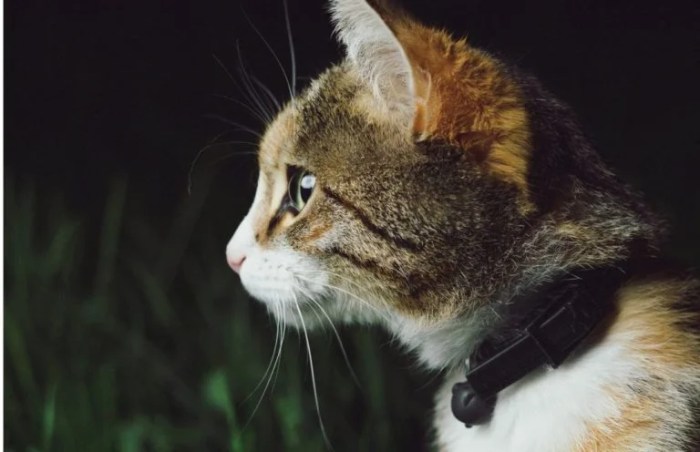
Source: co.uk
The cat tracker app is your primary interface for interacting with the device. Common features include live tracking, historical data, geofencing, and customizable notifications. A user-friendly app interface is essential for a positive tracking experience. Cluttered or confusing apps can be frustrating to use.
Different tracker brands offer varying app experiences. Some apps are intuitive and well-designed, while others are less polished. Consider downloading demo versions or reading reviews to get a sense of the app’s usability before making a purchase.
“I love the Pawfit app! The geofencing feature gives me so much peace of mind knowing I’ll get an alert if my cat, Leo, wanders outside the yard. It’s so easy to set up and use.”
Sarah M.
Geofencing works by creating virtual boundaries on a map. When your cat enters or exits a geofenced area, you’ll receive a notification on your smartphone. This is a valuable tool for keeping cats safe and preventing them from straying too far.
Size, Weight, and Comfort for Cats
The size and weight of a tracker are crucial for a cat’s comfort. A bulky or heavy tracker can irritate the cat’s skin, restrict their movement, and even cause them to avoid wearing it altogether. Choosing a tracker that’s appropriately sized for your cat’s breed and weight is essential.
Generally, smaller and lighter trackers are preferable. Consider your cat’s size and activity level. A small, sedentary cat will be more sensitive to weight than a large, active cat. Materials also play a role. Silicone and nylon are commonly used in tracker construction due to their flexibility and comfort.
To acclimate your cat to wearing a tracker, start by letting them sniff and investigate the device. Gradually introduce it by having them wear it for short periods, gradually increasing the duration over time. Positive reinforcement, such as treats and praise, can help create a positive association with the tracker.
Durability and Waterproofing
For outdoor cats, durability is paramount. Trackers used outdoors are exposed to a variety of hazards, including scratches, impacts, and extreme weather conditions. Look for trackers with rugged designs and a high level of waterproofing.
Waterproofing levels vary. Some trackers are simply splash-resistant, while others are fully submersible. Consider your cat’s lifestyle when choosing a tracker. If your cat enjoys swimming or frequently gets wet, a fully waterproof tracker is essential.
Assessing a tracker’s resistance to scratches and impacts involves examining the materials used in its construction and reading reviews from other users. Testing procedures often include drop tests, scratch tests, and exposure to extreme temperatures and humidity.
Imagine a tracker undergoing a drop test. The device is dropped from a height of one meter onto a hard, flat surface. The test assesses the tracker’s ability to withstand the impact without damage. The tracker is then inspected for cracks, scratches, or other signs of damage. This process is repeated multiple times from different angles to simulate real-world scenarios.
Subscription Costs and Data Plans
Many cat tracker providers utilize subscription models, charging a monthly or annual fee for access to certain features, such as real-time tracking and historical data. Comparing the costs of different data plans and their associated features is crucial for making an informed decision.
The value proposition of subscription-based tracking services lies in the ongoing support, software updates, and access to advanced features. However, it’s important to weigh the cost against the benefits to determine if it’s worthwhile.
Tracker providers collect and store various types of data, including location history, activity levels, and geofence entries. Review the provider’s privacy policy to understand how your data is used and protected.
- Subscription cost
- Data usage limits
- Features included in the subscription
- Contract length
- Cancellation policy
- Data privacy and security measures
Installation and Setup Procedures
Setting up a cat tracker is typically a straightforward process. The initial steps involve charging the tracker and downloading the smartphone app. Pairing the tracker with your smartphone is usually done via Bluetooth or Wi-Fi.
Calibrating the GPS signal is important for ensuring accurate location tracking. This typically involves taking the tracker outdoors and allowing it to acquire a signal from multiple satellites.
Troubleshooting common setup issues often involves checking the battery level, ensuring Bluetooth is enabled, and verifying that the app has the necessary permissions.
- Charge the tracker fully.
- Download the smartphone app from the App Store or Google Play.
- Create an account and follow the in-app instructions to pair the tracker with your smartphone.
- Calibrate the GPS signal by taking the tracker outdoors.
- Test the tracker by checking its location on the app.
Closure
From the intricacies of GPS technology to the comfort considerations for your cat, we’ve covered a lot of ground in our search for the cat trackers best. Understanding the different types of trackers, their features, and associated costs is crucial for making an informed decision. Ultimately, the ideal tracker balances accuracy, battery life, durability, and ease of use, all while ensuring your cat’s safety and well-being.
Investing in a cat tracker isn’t just about technology; it’s about providing reassurance and strengthening the bond with your beloved pet.
Essential FAQs
How accurate are cat trackers?
Accuracy varies depending on the technology (GPS, Bluetooth, Wi-Fi) and environmental factors. GPS trackers generally offer the best accuracy outdoors, while Bluetooth and Wi-Fi trackers are more suited for indoor use.
Do cat trackers require a subscription?
Many GPS and cellular trackers require a monthly subscription for data usage and access to features like real-time tracking and historical data. Bluetooth trackers typically don’t require a subscription.
How long does a cat tracker battery last?
Battery life varies significantly depending on the model and usage. Expect anywhere from a few days to several weeks, with power-saving features like sleep modes extending battery life.
Can a cat remove a tracker?
Some cats are adept at removing collars and trackers. Look for trackers with secure attachment mechanisms and consider using breakaway collars to prevent choking hazards.
Are cat trackers waterproof?
Many trackers offer some level of water resistance, but true waterproofing is rare. Check the IP rating to understand the tracker’s protection against water and dust.
How do I introduce a tracker to my cat?
Start by letting your cat sniff and investigate the tracker. Gradually introduce it by having your cat wear it for short periods, rewarding them with treats and praise.
What is geofencing?
Geofencing allows you to set up virtual boundaries. If your cat leaves the designated area, you’ll receive a notification on your smartphone.

