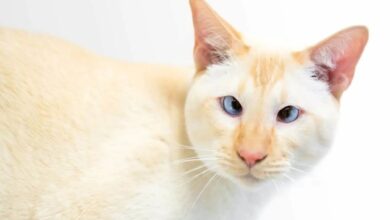
The Flame Point Siamese cat – a breed that captivates with its striking reddish-orange points and mesmerizing blue eyes. These aren’t just beautiful cats; they’re intelligent, vocal companions with a rich history and a unique genetic makeup. We’ll explore everything from their origins and personality quirks to the best ways to care for these enchanting felines, diving deep into what makes them so special.
Tracing back to Thailand (formerly Siam), the Flame Point Siamese emerged as a variation of the classic Siamese, thanks to a fascinating interplay of genetics. The “pointed” pattern, where color is concentrated on the face, ears, paws, and tail, is a result of a temperature-sensitive enzyme affecting pigment production. Flame Points specifically get their warm hue from a recessive gene, making them a bit rarer than other Siamese colors and adding to their allure.





Introduction to Flame Point Siamese
The Flame Point Siamese is a captivating breed, a variation of the classic Siamese known for its striking reddish-orange points against a creamy body. They’re intelligent, affectionate, and undeniably beautiful, but understanding their history, genetics, and specific needs is key to appreciating and caring for these unique cats. This article will delve into everything you need to know about Flame Point Siamese, from their origins to their quirks.
A Detailed History of the Flame Point Siamese Breed
The story of the Flame Point Siamese is intertwined with the broader history of the Siamese breed itself. Siamese cats originated in Thailand (formerly Siam), where they were prized companions of royalty. Early Siamese were known for their pointed coloration – darker markings on the face, ears, paws, and tail – a result of a temperature-sensitive enzyme affecting pigment production.
The traditional Siamese colors were Seal Point (dark brown), Blue Point (slate gray), Chocolate Point (milk chocolate brown), and Lilac Point (pale gray-pink).The Flame Point, however, emerged later. Initially, cats with reddish-orange points were considered undesirable and were often culled from breeding programs. In the 1950s, Carol Reed, an American breeder, began selectively breeding these cats, recognizing their potential and unique beauty.
She named them “Red Points.” Later, the name was changed to Flame Point to better reflect the color. The breed gained recognition in the 1970s and 80s, but remains less common than the traditional Siamese colors. Recognition by major cat registries has been a gradual process, with some still considering them a variation of the Siamese rather than a distinct breed.
Elaborating on the Genetic Factors Contributing to Flame Point Coloration
The flame point coloration is a fascinating example of genetics at work. It’s primarily determined by the “cs” gene, which controls the production of melanin. This gene has different alleles (versions). The “cs” allele is temperature-sensitive; it only allows melanin production in cooler areas of the body – the points. The specific allele responsible for the flame point is a recessive one, meaning a cat must inherit two copies of this allele (one from each parent) to display the reddish-orange coloration.
The reddish hue is due to a modification of the melanin, influenced by the enzyme tyrosinase. The underlying body color is a pale cream, also a result of the temperature-sensitive enzyme affecting pigment production.
Differences Between Flame Points and Other Siamese Point Variations
While all Siamese point variations share the characteristic pointed pattern, the specific colors differ significantly. Seal Points have dark brown points, Blue Points have slate gray points, Chocolate Points have milk chocolate brown points, and Lilac Points have pale gray-pink points. The difference lies in the type of melanin produced and the degree of its modification. Flame Points stand out with their distinct reddish-orange points, a color not found in the other traditional Siamese variations.
Temperamentally, while all Siamese are known for their vocal nature and intelligence, subtle differences can exist, though these are often attributed to individual personality rather than solely color.
Comparing the Four Main Point Colors
Here’s a table summarizing the key differences between the four main Siamese point colors:
| Color | Eye Color | Body Color | Common Temperament |
|---|---|---|---|
| Seal Point | Deep Blue | Cream | Vocal, Demanding, Intelligent |
| Blue Point | Blue | Off-White | Gentle, Calm, Affectionate |
| Chocolate Point | Amber | Pale Cream | Playful, Curious, Social |
| Lilac Point | Lavender | Very Pale Cream | Quiet, Reserved, Sweet |
Physical Characteristics of Flame Point Siamese
Describing the Typical Body Structure and Size
Flame Point Siamese cats are known for their elegant, slender build. They are medium-sized cats, typically weighing between 8 and 12 pounds. Their bodies are long and muscular, with a wedge-shaped head and large, triangular ears. They possess a distinctive “oriental” body type, characterized by long legs and a graceful, athletic appearance.
Detailing the Specific Characteristics of Their Coat
The coat of a Flame Point Siamese is short, fine, and sleek. It lies close to the body, giving them a refined look. The texture is silky to the touch. The points (face, ears, paws, and tail) are a vibrant reddish-orange, while the body is a creamy white or pale fawn. The contrast between the points and the body is a defining characteristic of the breed.
Explaining the Significance of the “Point” Markings
The “point” markings are a direct result of the temperature-sensitive enzyme affecting melanin production. Cooler areas of the body, like the extremities and face, are where the enzyme is active, allowing melanin to be produced and resulting in the darker coloration. Warmer areas of the body don’t allow melanin production, hence the lighter body color.
Visual Description of Kitten vs. Adult
A Flame Point Siamese kitten is born almost entirely white. As they mature, typically between 2-3 weeks of age, the points begin to darken. The intensity of the points continues to deepen with age, reaching their full vibrancy around 1-2 years old. A kitten’s points might start as a faint pinkish-orange, gradually transitioning to a richer, more defined flame color.
The body color also subtly shifts from pure white to a creamier shade.
Ideal Head Shape and Ear Placement
The ideal head shape for a Flame Point Siamese is a modified wedge – not as extreme as some other oriental breeds, but still distinctly wedge-shaped. The forehead is slightly rounded, and the muzzle is medium in length. The ears are large, triangular, and set wide apart, extending beyond the head’s Artikel. They should be alert and expressive, contributing to the cat’s intelligent appearance.
Temperament and Personality
Discussing Typical Personality Traits
Flame Point Siamese are renowned for their affectionate and intelligent nature. They are highly social cats who thrive on human interaction and often form strong bonds with their families. They are known to be playful, curious, and energetic, enjoying interactive games and exploring their surroundings. Their intelligence makes them easily trainable, and they often enjoy learning tricks.
Comparing and Contrasting Temperament with Other Siamese Colors
While all Siamese share a core personality, subtle differences can be observed. Flame Points are often described as being slightly more laid-back and gentle than Seal Points, though this is a generalization. They retain the Siamese’s characteristic vocalization but may be less demanding than some other color variations.
How Socialization Impacts Temperament
Early socialization is crucial for all kittens, but particularly for Siamese. Exposing Flame Point kittens to a variety of people, animals, and environments during their formative weeks (2-7 weeks) helps them develop into well-adjusted, confident adults. Lack of socialization can lead to fearfulness, shyness, or aggression.
Common Behaviors Exhibited by Flame Point Siamese
Here’s a list of common behaviors you can expect from a Flame Point Siamese:
- Vocalization: They are known to be talkative, using a variety of meows, chirps, and trills to communicate.
- Playfulness: They require plenty of interactive playtime to stay stimulated and prevent boredom.
- Affection Levels: They are highly affectionate and enjoy cuddling, being petted, and following their owners around.
- Intelligence: They are quick learners and can be trained to perform tricks or respond to commands.
- Curiosity: They are naturally curious and enjoy exploring new things.
- People-Oriented: They crave human companionship and can become lonely if left alone for extended periods.
Caring for a Flame Point Siamese
Providing a Comprehensive Guide to Feeding
Flame Point Siamese cats require a high-quality diet that is rich in protein and essential nutrients. Wet food is generally recommended as it helps with hydration, which is important for Siamese cats. Dry food can be offered as well, but ensure fresh water is always available. Avoid foods with excessive fillers or artificial ingredients. Portion control is important to prevent obesity.
Consult with a veterinarian to determine the appropriate amount of food for your cat’s age, weight, and activity level.
Detailing Grooming Requirements
Their short, sleek coat requires minimal grooming. A weekly brushing with a soft brush is usually sufficient to remove loose hair and keep the coat shiny. Regular nail trimming is also essential. Pay attention to their ears, cleaning them gently with a vet-approved ear cleaner as needed.
Importance of Regular Veterinary Checkups and Vaccinations
Regular veterinary checkups are crucial for maintaining your Flame Point Siamese’s health. Annual checkups allow the veterinarian to detect any potential health problems early on. Vaccinations are essential for protecting your cat from common infectious diseases. Parasite prevention (fleas, ticks, and worms) is also important.
Common Health Concerns and Prevention
Siamese breeds are predisposed to certain health concerns, including progressive retinal atrophy (PRA), amyloidosis, and respiratory problems. Responsible breeders screen their cats for these conditions. Maintaining a healthy diet, providing regular exercise, and minimizing stress can help prevent many health problems.
Step-by-Step Procedure for Introducing a Kitten

Source: hepper.com
Introducing a new Flame Point Siamese kitten to your home should be done gradually:
- Prepare a Safe Room: Designate a small, quiet room as the kitten’s safe haven.
- Introduce Slowly: Allow the kitten to explore the safe room at its own pace.
- Scent Swapping: Exchange bedding or toys between the kitten and other pets to familiarize them with each other’s scents.
- Supervised Introductions: After a few days, allow brief, supervised interactions with other pets.
- Gradual Expansion: Gradually expand the kitten’s access to the rest of the house.
- Patience is Key: Allow the kitten to adjust at its own pace, and avoid forcing interactions.
Epilogue
From their playful antics and affectionate nature to their distinctive appearance and intriguing genetics, Flame Point Siamese cats offer a truly rewarding companionship. Understanding their specific needs, from dietary considerations to potential health concerns, ensures a long and happy life together. Whether you’re a seasoned cat lover or considering welcoming a Flame Point into your home, this guide provides a comprehensive look at what makes this breed so captivating.
Ultimately, the bond between a person and their Flame Point Siamese is often described as incredibly special – a testament to their intelligence, loyalty, and undeniable charm. They’re more than just pets; they’re cherished members of the family, bringing joy and laughter to every day.
Question & Answer Hub
How long do Flame Point Siamese cats typically live?
With proper care, Flame Point Siamese cats generally live between 12 and 15 years, sometimes even longer.
Are Flame Point Siamese cats hypoallergenic?
Unfortunately, no cat breed is truly hypoallergenic. However, Siamese cats, including Flame Points, tend to produce less of the Fel d 1 protein, a common allergen, which may make them slightly more tolerable for some people with allergies.
What is the best type of food for a Flame Point Siamese?
A high-quality, protein-rich diet is essential. Look for cat food with meat as the primary ingredient and avoid foods with excessive fillers like corn or wheat. Wet food is also beneficial for hydration.
Why are Flame Point Siamese cats so vocal?
Siamese cats are known for being talkative! Flame Points inherit this trait, often using a variety of meows, chirps, and trills to communicate their needs and desires.
Do Flame Point Siamese cats need a lot of attention?
Yes, they thrive on interaction and can become lonely if left alone for extended periods. They enjoy playtime, cuddling, and being involved in their human’s activities.
What are some common health problems in Flame Point Siamese?
Like all breeds, they can be prone to certain issues like progressive retinal atrophy (PRA), amyloidosis, and respiratory problems. Regular vet checkups are crucial for early detection and management.