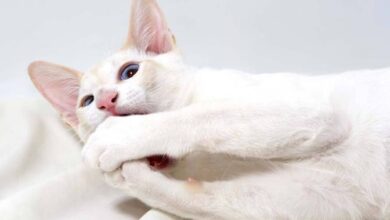
The Siamese cat, already renowned for its striking blue eyes and elegant demeanor, boasts a captivating variation: the red point. This isn’t just a color; it’s a fascinating blend of genetics, history, and unique characteristics that set these cats apart. From their ancient origins in Thailand to their modern-day popularity, red point Siamese have a story to tell – a story we’ll explore in detail, covering everything from their genetics to their care and even their appearances in popular culture.
Understanding the red point variation requires delving into the science of color genetics, appreciating the historical journey of the Siamese breed, and recognizing the subtle differences that distinguish them from other point colors. We’ll also look at how to best care for these intelligent and affectionate companions, ensuring they live long, healthy, and happy lives.



Origins and History of Siamese Red Point Cats
The Siamese cat, with its striking blue eyes and elegant build, is a breed steeped in history and shrouded in a bit of mystery. While the classic seal point Siamese is arguably the most well-known, the red point variation – also known as flame point or apple point – adds another layer of intrigue to this beloved breed. Understanding the red point’s journey requires delving into the early development of the Siamese and the genetic factors that shaped its unique coloration.The Siamese breed originated in Thailand (formerly Siam), where they were revered as sacred cats in royal households.
Early Siamese were likely a mix of various local cat types, gradually evolving into the distinct breed we recognize today. Initially, the color point pattern wasn’t as standardized as it is now. Early descriptions of Siamese cats mention a range of colors, including variations that could be considered precursors to the red point. Selective breeding, particularly in the late 19th and early 20th centuries by breeders like Mrs.
Conrad Philipps in England, played a crucial role in solidifying the Siamese breed’s characteristics. The red point, however, was initially less common and often considered a novelty. Early breeders focused primarily on establishing the seal point as the standard, and red points were sometimes dismissed or even inadvertently bred out. It wasn’t until later that dedicated breeders began to actively select for and stabilize the red point coloration.The genetic lineage of the red point can be traced back to the early Siamese populations, where the genes responsible for the red/orange pigment were present, albeit often masked by other genetic factors.
The emergence of the red point as a distinct color point is a testament to the power of selective breeding and the complex interplay of genes.
Timeline of Siamese Cat Colors
Here’s a simplified timeline illustrating the evolution of Siamese cat colors, with the red point’s place within that progression:
- Ancient Siam (Pre-19th Century): A variety of local cat types with varying colors and patterns existed, some of which likely carried the genes for color point coloration and red/orange pigment.
- 19th Century: Early Siamese cats imported to the West displayed a range of colors, including those that could be considered precursors to seal, blue, chocolate, and red points.
- Early 20th Century: Breeders in England and the United States focused on establishing the seal point as the standard Siamese color. Red points were less common and often overlooked.
- Mid-20th Century: Dedicated breeders began to actively select for and stabilize the red point coloration, leading to its increased recognition and acceptance within the Siamese breed.
- Late 20th Century – Present: Red point Siamese (and their variations like tortie point and tabby point) are increasingly popular and recognized by major cat registries.
Genetics of Red Point Coloration
The striking color point pattern in Siamese cats, including the red point, is a fascinating example of how genetics can influence physical appearance. The key lies in a temperature-sensitive tyrosinase enzyme, which plays a crucial role in melanin production. This enzyme is responsible for producing both black/brown (eumelanin) and red/orange (pheomelanin) pigments.In Siamese cats, the
- cs* allele (color series) is temperature-sensitive. At lower body temperatures (found in the extremities – paws, ears, face, tail), the enzyme functions normally, producing pigment. However, at higher body temperatures (in the core of the body), the enzyme is partially inactive, resulting in little to no pigment production. This temperature sensitivity creates the characteristic color point pattern. Different alleles of the
- cs* gene result in different point colors.
- cs’* produces seal point,
- cs* produces blue point,
- cs d* produces chocolate point, and
- cs l* produces lilac point. The red point coloration arises from a separate, interacting gene.
The
- a* allele (agouti) influences the intensity and distribution of the red/orange pigment. The
- A* allele (full color) allows for full expression of pigment, while the
- at* allele (non-agouti) suppresses pigment production, resulting in a solid color. In red points, the presence of the
- a* allele allows for the expression of the red/orange pigment in the points, creating the flame-like coloration. The intensity of the red can vary depending on the specific genetic makeup of the cat.
Key Genes and Alleles in Siamese Coloration
Here’s a table summarizing the key genes and alleles involved in Siamese coloration:
| Gene | Allele | Effect on Color |
|---|---|---|
| cs (Color Series) | cs’ (Seal) | Seal Point |
| cs (Color Series) | cs (Blue) | Blue Point |
| cs (Color Series) | csd (Chocolate) | Chocolate Point |
| cs (Color Series) | csl (Lilac) | Lilac Point |
| a (Agouti) | A (Full Color) | Allows full expression of pigment, including red/orange in red points. |
| a (Agouti) | at (Non-Agouti) | Suppresses pigment production, resulting in a solid color. |
Distinguishing Red Point from Other Siamese Colors
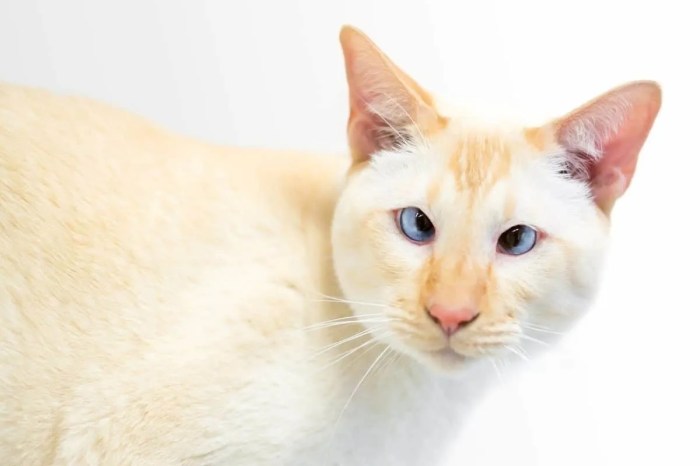
Source: petskb.com
While all Siamese cats share a distinctive color point pattern, differentiating a red point from other variations like seal, blue, chocolate, and lilac points requires a keen eye. The most obvious difference lies in the color of the points themselves. Seal points have dark brown points, blue points have gray-blue points, chocolate points have milk chocolate-colored points, and lilac points have a pinkish-gray hue.
Red points, on the other hand, exhibit a vibrant, flame-like orange or red coloration in their points.The nuances in shading and intensity can be subtle. A red point might have a deeper, richer red in some areas and a lighter, more apricot shade in others. The body color (the non-pointed areas) is typically a creamy white, but can also range from a very light beige to a slightly darker tan.
The intensity of the red pigment can also vary, with some red points displaying a more muted, softer hue, while others have a more intense, fiery appearance.Lighting conditions significantly impact the perceived color of a Siamese cat. Artificial light can alter the appearance of the points, making them appear darker or lighter than they actually are. Natural daylight provides the most accurate representation of the cat’s true color.
Therefore, when evaluating a Siamese cat’s color, it’s best to observe it in natural light.
Visual Guide to Siamese Point Colors
Here’s a descriptive guide to help differentiate the various Siamese point colors:
- Seal Point: Points are a dark, rich brown, almost black in some cases. Body color is creamy white.
- Blue Point: Points are a soft, gray-blue color. Body color is creamy white.
- Chocolate Point: Points are a warm, milk chocolate brown. Body color is creamy white.
- Lilac Point: Points are a delicate pinkish-gray color. Body color is creamy white.
- Red Point (Flame Point): Points are a vibrant orange or red color, resembling flickering flames. Body color is creamy white to light beige.
Physical Characteristics and Appearance
Siamese cats are renowned for their elegant and athletic build. They typically weigh between 8 and 12 pounds and possess a long, slender body with well-defined muscles. Their head is wedge-shaped, with large, triangular ears that are set wide apart. The eyes are almond-shaped and a striking blue, a hallmark of the breed. Within the red point variety, these standard characteristics remain consistent, although the intensity of the red coloration in the points is the defining feature.The typical eye color of a red point Siamese is a brilliant, deep blue.
However, the shade can vary slightly, ranging from a lighter, almost icy blue to a deeper, more sapphire-like hue. Factors influencing eye color include genetics and age – kittens often have lighter blue eyes that darken with maturity.The coat of a Siamese cat is short, fine, and sleek. It lies close to the body and requires minimal grooming. The texture is typically soft and silky to the touch.
Common Physical Traits of Red Point Siamese
Here’s a breakdown of common physical traits observed in red point Siamese, categorized by head, body, and tail:
- Head: Wedge-shaped head, large triangular ears, almond-shaped blue eyes, prominent muzzle.
- Body: Long, slender, and muscular body; elegant and graceful posture.
- Tail: Long, tapering tail that is often carried high.
Temperament and Behavior
Siamese cats are known for their intelligence, vocal nature, and affectionate personalities. They are highly interactive and thrive on human companionship. They are often described as “dog-like” in their loyalty and willingness to engage in playful activities. Their vocalizations are distinctive – a loud, raspy meow that can be quite demanding.Whether red point Siamese exhibit unique behavioral traits compared to other color point variations is a subject of ongoing debate.
Some anecdotal evidence suggests that red points may be slightly more playful or energetic than other Siamese, but this is not definitively proven. It’s more likely that individual personality differences play a larger role than color alone.Socialization and early handling are crucial in shaping a Siamese cat’s personality. Kittens who are exposed to a variety of people, animals, and environments are more likely to develop into well-adjusted and confident adults.
Common Siamese Cat Behaviors and Their Meanings
Here’s a table outlining common Siamese cat behaviors and their potential meanings:
| Behavior | Description |
|---|---|
| Vocalization (Meowing) | Frequent and often loud meowing; can be used to solicit attention, express hunger, or communicate discomfort. |
| Affectionate Rubbing | Rubbing against legs or furniture; a sign of affection and marking territory. |
| Playful Pouncing | Pouncing on toys or objects; a natural hunting instinct. |
| Following Owners | Constantly following owners around the house; a sign of strong attachment and desire for companionship. |
Conclusive Thoughts
From the intricate dance of genes that create their distinctive markings to their playful personalities and potential health considerations, the Siamese red point cat is a truly remarkable breed. Whether you’re a seasoned cat enthusiast or considering welcoming one into your home, this exploration has hopefully provided a deeper appreciation for these beautiful and intelligent felines. Their unique charm and captivating history make them a cherished addition to any loving family.
Ultimately, the red point Siamese embodies a perfect blend of elegance, intelligence, and affection, making them a truly special breed worthy of admiration and responsible care.
Key Questions Answered
Why are Siamese cats called “point” cats?
The term “point” refers to the darker coloration on the cat’s cooler body parts – the face, ears, paws, and tail. This is due to a temperature-sensitive enzyme that’s less active in warmer areas.
What’s the difference between a red point and a flame point?
They’re essentially the same! “Red point” is the more traditional term, while “flame point” is a more modern descriptor often used to emphasize the vibrant orange-red color of the points.
Do red point Siamese cats have any specific health concerns?
Like all Siamese, they’re predisposed to conditions like progressive retinal atrophy and amyloidosis. However, the red point coloration itself isn’t directly linked to an increased risk of these diseases.
What is the ideal diet for a red point Siamese?
A high-quality diet rich in protein is essential. Look for cat food with real meat as the primary ingredient and avoid fillers like corn and wheat.
How much grooming do red point Siamese cats need?
Their short, sleek coat requires minimal grooming. Brushing once or twice a week is usually sufficient to prevent matting and reduce shedding.
Are red point Siamese cats vocal?
Yes! Siamese cats are known for being quite vocal, often “talking” to their owners with a distinctive meow. Red points are no exception.
What is the best way to socialize a Siamese kitten?
Early socialization is key! Expose them to different people, animals, and environments from a young age to help them develop into well-adjusted adults.