More and more cat owners are recognizing the joys of letting their feline friends explore the outdoors safely, and the cat harness is at the heart of this trend. Gone are the days of solely indoor cats; many owners now prioritize their cat’s enrichment and well-being by providing supervised outdoor time. This shift is driven by a desire to combat boredom, provide mental stimulation, and even allow cats to experience natural instincts like hunting and exploring – all while minimizing the risks associated with free-roaming, like traffic accidents and encounters with predators.
While precise statistics are hard to come by, the pet safety market has seen a significant rise in harness sales, reflecting this growing demand. This guide will walk you through everything you need to know about choosing the cat harness best suited for your furry companion, from different types and essential features to training tips and safety considerations.




We’ll delve into the various harness designs available, including escape-proof, vest, step-in, and H-style options, outlining their pros and cons. You’ll learn how to measure your cat accurately, identify crucial features like adjustability and reflective elements, and understand the importance of a proper fit. Plus, we’ll offer top recommendations across different categories – from escape artists to beginners – and provide a step-by-step guide to harness training, ensuring a positive and safe experience for both you and your cat.
Introduction: The Rise of Cat Harnesses
For years, the image of a cat was synonymous with indoor living. But times are changing. More and more cat owners are recognizing the benefits of supervised outdoor exploration for their feline companions, and the cat harness has become a key piece of equipment in this shift. It’s a far cry from the days when letting a cat roam freely was the norm.
The decision to use a harness instead of allowing free-roaming is driven by a growing awareness of the dangers cats face outdoors – traffic, predators, diseases, and getting lost are just a few. While the allure of the wild is undeniable for many cats, providing a safe and controlled environment for them to experience it is paramount. While concrete statistics on harness usage are still emerging, pet insurance claims related to outdoor cat injuries have steadily increased, suggesting a growing number of owners are venturing out with their cats.
Concerns about feline safety are definitely fueling the harness trend.
This article will serve as your comprehensive guide to cat harnesses. We’ll explore the different types available, highlight essential features to consider, and offer top recommendations to help you choose the perfect harness for your cat’s personality and lifestyle. We’ll cover everything from escape-proof designs to training tips, ensuring your cat’s safety and enjoyment during their outdoor adventures.
Types of Cat Harnesses: A Comprehensive Overview
Choosing the right harness is the first step towards a successful outdoor experience with your cat. Different designs cater to different personalities and levels of adventurousness. Understanding the pros and cons of each type is crucial for finding a comfortable and secure fit.
| Harness Type | Pros | Cons |
|---|---|---|
| Escape-Proof Harnesses | Highly secure, multiple adjustment points, minimizes escape risk. | Can be restrictive if not properly fitted, may require more patience during training. |
| Vest Harnesses | Comfortable, distributes pressure evenly, good for cats who dislike tight straps. | Can be bulky, may not be as secure as escape-proof harnesses for determined escape artists. |
| Step-In Harnesses | Easy to put on and take off, often lightweight and comfortable. | Cats can sometimes step out of them, less secure for active or anxious cats. |
| Figure-8 Harnesses | Simple design, allows for good range of motion. | Less secure than other types, prone to slipping, not recommended for escape artists. |
Escape-proof harnesses typically feature multiple straps and adjustment points, often incorporating Velcro or quick-release buckles for a snug and secure fit. Vest harnesses are constructed from padded fabric, often nylon or neoprene, providing a comfortable and even distribution of pressure across the cat’s chest. Step-in harnesses are designed with a simple opening that the cat steps into, secured with straps around the chest and neck.
Figure-8 harnesses are characterized by their figure-eight shape, with straps looping around the cat’s chest and neck. The construction materials vary, but nylon webbing is common across all types, often reinforced with durable stitching.
Anxious cats often benefit from the comfort and even pressure distribution of a vest harness. More adventurous and active cats might require the extra security of an escape-proof harness. For cats who are easily stressed by being handled, a step-in harness can be a good option due to its ease of use.
H-style harnesses are a variation of the vest harness, characterized by their distinct “H” shape when viewed from above. The straps form an “H” around the cat’s chest, providing a secure and comfortable fit while allowing for a good range of motion. The advantage of H-style harnesses lies in their ability to distribute pressure evenly and prevent chafing, making them a good choice for cats who spend extended periods wearing a harness.
Essential Features to Look For
Not all cat harnesses are created equal. Selecting a harness with the right features is crucial for your cat’s safety and comfort. Before you buy, consider these key elements that contribute to a quality harness.
- Adjustability: A harness that can be adjusted to fit your cat’s unique body shape is essential for a secure and comfortable fit. Look for multiple adjustment points on the neck and chest straps.
- Secure Buckles: Sturdy, reliable buckles are vital to prevent escapes. Quick-release buckles are convenient, but ensure they are properly secured.
- Comfortable Padding: Padding, especially around the chest and shoulders, minimizes chafing and irritation, making the harness more comfortable for your cat to wear.
- Reflective Elements: Reflective strips or stitching enhance visibility in low-light conditions, increasing your cat’s safety during evening or early morning walks.
- Leash Attachment Point: A strong, secure leash attachment point is crucial for controlling your cat during outdoor excursions.
Proper fit is paramount. To measure your cat, use a soft measuring tape. Measure the circumference of their neck where the collar would sit, and the circumference of their chest just behind their front legs. Consult the manufacturer’s sizing chart to determine the appropriate size based on these measurements. The harness should be snug but not tight, allowing for two fingers to fit comfortably between the harness and your cat’s body.
Reflective materials, such as reflective tape or stitching, bounce light back towards its source, making your cat more visible to drivers and other pedestrians, especially during dusk or dawn. Breathable fabrics, like mesh or lightweight nylon, allow air to circulate, preventing overheating and discomfort, particularly in warmer weather.
Avoid harnesses made from materials that could be toxic or irritating to your cat’s skin. This includes materials containing phthalates, lead, or excessive dyes. Also, steer clear of rough or abrasive fabrics that could cause chafing.
Escape-Proof Harnesses: Minimizing the Risk
Cats are notorious for their ability to wiggle and squirm their way out of seemingly secure restraints. Escape-proof harnesses are specifically designed to address this challenge, minimizing the risk of your cat bolting off during outdoor adventures.
Cats often escape harnesses by slipping through loose straps, backing out of poorly fitted harnesses, or simply wriggling their bodies to create enough slack to break free. The design of an escape-proof harness directly combats these tendencies.
Escape-proof harnesses incorporate several key design elements: multiple adjustment points (often four or more), secure closures like Velcro and quick-release buckles, and a snug, form-fitting design. The multiple adjustment points allow you to customize the fit to your cat’s unique body shape, eliminating any slack that could be exploited. Secure closures prevent accidental openings, and the snug fit minimizes the cat’s ability to wiggle free.
A properly fitted escape-proof harness should feel snug but not restrictive. You should be able to comfortably slide two fingers between the harness and your cat’s body. The straps should lie flat against the cat’s chest and shoulders, without any gaps or loose areas. The harness should not impede your cat’s breathing or movement.
Introducing an escape-proof harness should be a gradual process. Start by letting your cat sniff and investigate the harness indoors. Then, put it on for short periods, gradually increasing the duration as your cat becomes more comfortable. Pair the harness with positive reinforcement, such as treats and praise, to create a positive association.
The secure harness closure system typically involves a combination of Velcro and a quick-release buckle. The Velcro provides an initial secure hold, while the buckle offers an additional layer of protection against accidental openings. To secure the buckle, insert the strap into the buckle slot and firmly press the buckle until it clicks into place. To release the buckle, simply press the release button and pull the strap.
Comfort and Safety: Prioritizing Your Cat’s Well-being
While safety is paramount, a cat will not enjoy outdoor excursions if the harness is uncomfortable. Prioritizing your cat’s well-being means choosing a harness that balances security with comfort.
Padding plays a crucial role in comfort. It cushions the harness against your cat’s body, preventing pressure points and minimizing chafing. The more padding, the more comfortable the harness will be, especially for cats who are sensitive to pressure.
Chafing and irritation can occur if the harness is too tight, made from rough materials, or lacks adequate padding. Look for signs of discomfort, such as excessive grooming, redness, or sores on the skin where the harness makes contact. If you notice any of these signs, loosen the harness or consider switching to a different model.
Signs of discomfort include excessive scratching at the harness, reluctance to wear the harness, changes in behavior (e.g., hiding, aggression), and visible signs of irritation on the skin. Lightweight materials are essential for preventing overheating, especially in warmer climates. A heavy harness can restrict movement and make your cat feel uncomfortable.
“When choosing a harness for your cat, prioritize comfort and a secure fit. Regularly check for any signs of irritation or chafing, and always supervise your cat during outdoor excursions. A well-fitted, comfortable harness can provide a safe and enjoyable experience for both you and your feline companion.”Dr. Emily Carter, Veterinarian
Top Harness Recommendations (Categorized)
Finding the perfect harness can feel overwhelming with so many options available. To help you narrow down your choices, we’ve compiled a list of top recommendations, categorized by specific needs and preferences.
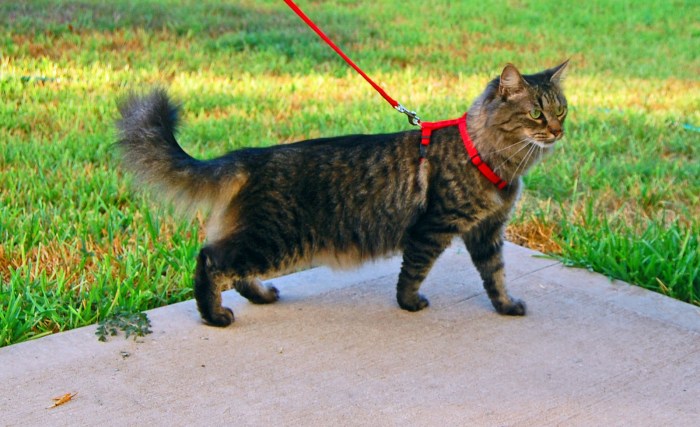
Best for Escape Artists
Source: adventurecats.org
- Brand: PupTeck
- Model: Escape Proof Cat Harness
- Key Features: Multiple adjustment points, secure Velcro and buckle closures, escape-proof design.
- Price Range: $20 – $30
- Description: This harness is a favorite among owners of determined escape artists. The multiple adjustment points allow for a truly customized fit, and the combination of Velcro and buckles provides exceptional security. However, some cats may find it slightly restrictive initially.
Best for Beginners
- Brand: Rabbitgoo
- Model: Cat Harness and Leash Set
- Key Features: Easy to put on and take off, comfortable vest design, reflective stitching.
- Price Range: $15 – $25
- Description: This harness is a great starting point for cat owners new to harness training. The vest design is comfortable and easy to fit, and the reflective stitching enhances visibility. It’s not as secure as escape-proof models, but it’s a good option for cats who are not prone to escaping.
Best for Travel
- Brand: Sleepypod
- Model: HexFlex Cat Harness
- Key Features: Lightweight, foldable, comfortable, secure.
- Price Range: $35 – $45
- Description: The Sleepypod HexFlex harness is ideal for travel. It’s lightweight, foldable, and packs easily into a suitcase. The unique HexFlex construction provides both comfort and security.
Best Value
- Brand: PetSafe
- Model: Come With Me Kitty Harness
- Key Features: Adjustable, comfortable, affordable.
- Price Range: $10 – $20
- Description: This harness offers a good balance of comfort, security, and affordability. It’s adjustable to fit a wide range of cat sizes and is made from durable materials.
| Harness Name | Price | Material | Best For | Rating |
|---|---|---|---|---|
| PupTeck Escape Proof | $25 | Nylon, Velcro, Buckles | Escape Artists | 4.5/5 |
| Rabbitgoo Cat Harness | $20 | Mesh, Nylon | Beginners | 4/5 |
| Sleepypod HexFlex | $40 | HexFlex Fabric | Travel | 4.8/5 |
| PetSafe Come With Me Kitty | $15 | Nylon | Value | 3.8/5 |
| Voyager Step-In Harness | $18 | Polyester | Easy On/Off | 3.5/5 |
User reviews for the PupTeck harness frequently praise its effectiveness in preventing escapes, but some owners note that it can take some time to get the fit just right. The Rabbitgoo harness receives positive feedback for its comfort and ease of use, but some cats have managed to slip out of it. The Sleepypod HexFlex is consistently praised for its portability and comfort, while the PetSafe harness is appreciated for its affordability and durability.
Harness Training: A Step-by-Step Guide
Introducing a harness to your cat requires patience and a gradual approach. Rushing the process can lead to stress and resistance. Here’s a step-by-step guide to successful harness training.
Start by acclimating your cat to wearing the harness indoors. Leave the harness near their favorite resting spot to allow them to sniff and investigate it. Then, put the harness on for short periods (5-10 minutes) while they’re engaged in a relaxing activity, such as eating or grooming. Gradually increase the duration as they become more comfortable.
Once your cat is comfortable wearing the harness indoors, introduce the leash. Attach the leash to the harness and let your cat drag it around the house under supervision. This allows them to get used to the feeling of the leash without being forced to walk with it.
Positive reinforcement is key. Reward your cat with treats and praise whenever they exhibit positive behavior during harness training. Avoid forcing them to do anything they don’t want to do. Short outdoor excursions should begin in a quiet, enclosed area, such as a fenced yard or balcony. Keep the leash short and allow your cat to explore at their own pace.
If your cat resists wearing the harness, don’t force it. Take a break and try again later. You can also try rubbing catnip on the harness to make it more appealing. If your cat consistently refuses to wear the harness, it may not be the right choice for them.
Materials and Durability: Longevity and Safety
The materials used in a cat harness significantly impact its durability and safety. Choosing a harness made from high-quality materials will ensure it can withstand the rigors of outdoor adventures and provide long-lasting protection for your cat.
Nylon is a popular choice for cat harnesses due to its strength, durability, and resistance to abrasion. However, it can be prone to stretching over time. Polyester is another durable option that is less prone to stretching than nylon. Neoprene is a soft, flexible material that provides cushioning and comfort, but it may not be as durable as nylon or polyester.
Stitching quality is a critical indicator of harness durability. Look for harnesses with reinforced stitching, especially at stress points such as the attachment points for the leash and buckles. Sturdy buckles and hardware are essential for ensuring the harness remains secure during outdoor excursions. Avoid harnesses with flimsy or easily broken buckles.
Cleaning a cat harness is relatively simple. Most harnesses can be hand-washed with mild soap and water. Rinse thoroughly and allow to air dry. Avoid using harsh chemicals or putting the harness in the washing machine or dryer, as this can damage the materials.
Imagine a harness undergoing stress testing. The straps are pulled taut, simulating a cat pulling against the leash. The buckles are subjected to repeated opening and closing, testing their durability. The stitching is examined for any signs of fraying or unraveling. The harness is then exposed to simulated sunlight and moisture to assess its resistance to fading and degradation.
This rigorous testing process helps ensure that the harness can withstand the demands of outdoor use.
Sizing and Fit: Ensuring a Perfect Match
A properly sized and fitted harness is essential for your cat’s comfort and safety. A harness that is too tight can restrict movement and cause discomfort, while a harness that is too loose can allow your cat to escape.
Accurate measurements are the foundation of a good fit. Measure your cat’s neck circumference where the collar would sit, and their chest circumference just behind their front legs. Consult the manufacturer’s sizing chart to determine the appropriate size based on these measurements.
Here’s a general sizing chart (measurements are approximate):
| Breed (Example) | Neck Girth (inches) | Chest Girth (inches) |
|---|---|---|
| Siamese | 8-10 | 12-16 |
| Maine Coon | 14-18 | 20-28 |
| Persian | 10-12 | 14-20 |
| Domestic Shorthair (Average) | 10-14 | 16-22 |
Adjust the harness straps to achieve a snug but comfortable fit. The harness should be secure enough to prevent escapes, but not so tight that it restricts your cat’s breathing or movement. Check for proper fit while your cat is moving by observing their gait and posture. If they appear uncomfortable or restricted, loosen the straps slightly.
A harness that is too tight can cause chafing, irritation, and difficulty breathing. A harness that is too loose can allow your cat to slip out of it, putting them at risk of escaping. Regularly check the fit of your cat’s harness, especially as they gain or lose weight.
Accessories and Add-ons
Enhance your cat’s outdoor experience with these helpful accessories and add-ons.
A bungee leash can provide a more comfortable and controlled walking experience for both you and your cat. The bungee action absorbs shock, preventing sudden jolts when your cat pulls or changes direction. Explain the purpose of harness pouches for carrying treats or waste bags. A harness pouch provides a convenient way to carry treats for positive reinforcement or waste bags for responsible cleanup.
Reflective vests or accessories can significantly increase your cat’s visibility in low-light conditions, enhancing their safety during evening or early morning walks. Comfortable cat collars, when used in conjunction with a harness, can provide an additional layer of security and allow you to easily identify your cat if they become lost. However, ensure the collar is breakaway to prevent choking hazards.
Essential accessories for safe outdoor exploration with your cat include: a secure harness, a leash (bungee recommended), waste bags, treats for positive reinforcement, reflective accessories, and a comfortable cat collar (optional).
Final Summary
Ultimately, selecting the cat harness best for your feline friend is about prioritizing their comfort, safety, and happiness. By understanding the different types, features, and training techniques, you can confidently equip your cat for enriching outdoor adventures. Remember that gradual introduction and positive reinforcement are key to a successful harness experience. With the right harness and a little patience, you can open up a whole new world of exploration for your cat, while keeping them safe and secure.
So, take the time to research, measure carefully, and choose a harness that fits your cat’s personality and lifestyle – the rewards of shared outdoor time are well worth the effort!
FAQs
How do I know if a harness is the right size?
Accurate measurements are crucial! Measure your cat’s neck and chest girth, then consult the manufacturer’s sizing chart. The harness should be snug but not tight, allowing room for two fingers to fit comfortably between the harness and your cat’s body.
Can I use a harness on a kitten?
Yes, but introduce it very gradually and ensure the harness is specifically designed for kittens, with adjustable straps and lightweight materials. Supervise them closely during initial wear.
What if my cat hates wearing a harness?
Patience is key! Start by letting your cat sniff and investigate the harness. Reward them with treats and praise for simply being near it. Gradually increase the time they wear it indoors, always associating it with positive experiences.
Are reflective harnesses worth the extra cost?
Absolutely! Reflective elements significantly enhance visibility in low-light conditions, making your cat safer during evening or early morning walks.
How often should I clean my cat’s harness?
Clean the harness regularly, especially after outdoor adventures. Most harnesses can be hand-washed with mild soap and water. Always check the manufacturer’s instructions for specific cleaning recommendations.
What’s the difference between a figure-8 harness and an H-style harness?
Figure-8 harnesses are simpler and often less secure, while H-style harnesses distribute pressure more evenly across the cat’s chest and shoulders, offering better control and potentially more escape resistance.