Losing a cat is a nightmare scenario for any pet owner. Thankfully, technology has advanced significantly, and now we have reliable solutions like GPS tags for cats to help us keep our beloved companions safe and sound. From humble beginnings with basic pet tracking, we’ve arrived at sophisticated GPS technology that offers real-time location data and peace of mind. The rising concerns about lost or stolen cats have fueled the demand for these devices, and understanding how they work is key to choosing the right one for your feline friend.
At their core, GPS trackers use satellites to pinpoint a cat’s location, transmitting that information to your smartphone. But with so many options available, it can be overwhelming. We’ll break down the different types of tracking technologies, explore various GPS tracker designs, and guide you through the essential features to consider, ensuring you make an informed decision to protect your cat.


Introduction to Cat GPS Tracking
Losing a cat is a uniquely distressing experience. Unlike dogs, cats are often more independent and prone to wandering, making them harder to track down. Historically, finding a lost cat relied on luck, posters, and the kindness of strangers. But the rise of technology has offered a new layer of security and peace of mind for cat owners. This article explores the world of cat GPS trackers, covering everything from the technology behind them to choosing the right one for your feline friend.
Pet tracking technology has evolved significantly. Early attempts involved simple radio transmitters, offering limited range and functionality. The advent of GPS (Global Positioning System) revolutionized the field, providing accurate location data using satellite networks. Initially expensive and bulky, GPS trackers have become increasingly miniaturized and affordable, making them a viable option for even the smallest pets. The growing concern about lost or stolen cats, coupled with advancements in battery technology and cellular connectivity, has fueled the demand for reliable cat GPS tracking solutions.
At its core, GPS technology works by receiving signals from a network of satellites orbiting Earth. A GPS receiver, embedded in the tracker, calculates its position based on the time it takes to receive signals from multiple satellites. This data is then transmitted to a smartphone app via cellular or Wi-Fi connection, allowing owners to view their cat’s location in real-time.
It’s essentially like a tiny, portable navigation system for your cat.
| Technology | Pros | Cons |
|---|---|---|
| GPS | Highly accurate location tracking, wide range, works outdoors. | Requires subscription for cellular data, can be battery-intensive, may not work well indoors. |
| Bluetooth | Low cost, easy to set up, good for short-range tracking. | Limited range (typically 30-100 feet), requires smartphone to be nearby, not suitable for finding lost cats far from home. |
| Radio Frequency (RF) | Longer range than Bluetooth, doesn’t require a smartphone. | Less accurate than GPS, susceptible to interference, often requires a handheld receiver. |
Types of GPS Trackers for Cats
Cat GPS trackers come in various form factors, each with its own advantages and disadvantages. The most common types are collars, tags, and integrated devices. The best choice depends on your cat’s personality, lifestyle, and your budget.
Collars
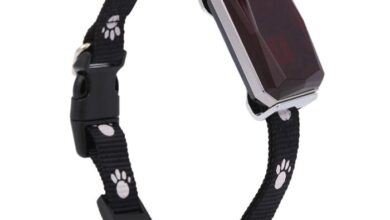
Collars are the most familiar form factor, resembling a standard cat collar with a GPS tracker integrated into the design. They offer a relatively unobtrusive way to track your cat, but the collar itself can be a source of discomfort for some cats, especially those with long or thick fur. Durability is also a concern, as collars can be easily damaged or removed.
Tags
GPS tags are smaller and lighter than collars, often designed to attach to an existing collar or harness. They are a good option for cats who are sensitive to wearing a full collar. However, they are more prone to falling off, and their smaller size can limit battery life and GPS accuracy.
Integrated Devices
Integrated devices combine the tracker and collar into a single unit. These are often more durable and secure than separate collars and tags, but they can be bulkier and more expensive. They are a good choice for active cats or those who are prone to escaping.
| Tracker | Size | Weight | Battery Life | GPS Accuracy | Subscription Fees |
|---|---|---|---|---|---|
| Tractive GPS Cat | 45 x 25 x 12 mm | 35g | Up to 4 days | 5 meters | $5 – $10/month |
| Whistle GO Explore | 65 x 35 x 15 mm | 45g | Up to 10 days | 3 meters | $8 – $13/month |
| Fi Smart Collar | 70 x 30 x 20 mm | 55g | Up to 30 days | 10 meters | $5 – $10/month |
| Link AKC Smart Collar | 65 x 35 x 20 mm | 60g | Up to 3 days | 10 meters | $10 – $20/month |
| Pawfit 3 | 50 x 30 x 12 mm | 30g | Up to 7 days | 5 meters | $4 – $8/month |
Considerations for different breeds and coat lengths are important. For breeds with long, thick fur like Persians or Maine Coons, a wider collar is recommended to prevent the tracker from getting tangled. Shorter-haired breeds like Siamese or Bengals can often wear smaller, lighter trackers comfortably. Adjustable collars are essential to ensure a snug but not restrictive fit.
Features to Consider When Choosing a Tracker
Selecting the right cat GPS tracker involves more than just comparing prices. Several key features can significantly impact its effectiveness and usability. Understanding these features will help you make an informed decision.
GPS Accuracy
GPS accuracy refers to how precisely the tracker can pinpoint your cat’s location. It’s typically measured in meters. A lower number indicates greater accuracy. While most trackers claim an accuracy of 5-10 meters, real-world performance can vary depending on environmental factors like buildings and trees. Higher accuracy is crucial for quickly locating a lost cat in a densely populated area.
Real-Time Tracking vs. Periodic Updates
Real-time tracking provides continuous location updates, allowing you to monitor your cat’s movements in near real-time. However, this comes at the cost of significantly reduced battery life. Periodic updates, on the other hand, transmit location data at intervals (e.g., every 15 minutes or hourly), extending battery life but potentially delaying the detection of a lost cat. The best option depends on your priorities and your cat’s roaming habits.
Geofencing
Geofencing allows you to create virtual boundaries on a map. When your cat enters or exits a geofenced area, you’ll receive an alert on your smartphone. This is a valuable tool for keeping your cat within your yard or preventing them from wandering into dangerous areas. Geofences can be customized to different shapes and sizes to suit your needs.
Activity Monitoring
Many cat GPS trackers include activity monitoring features that track your cat’s movement, sleep patterns, and overall activity levels. This data can provide insights into your cat’s behavior and health, potentially alerting you to any unusual changes that might warrant a visit to the veterinarian.
- Indoor Cats: Prioritize longer battery life, smaller size, and geofencing capabilities to ensure they stay within the house.
- Outdoor Cats: Focus on GPS accuracy, durability, weather resistance, and a robust subscription plan for reliable tracking.
Battery Life and Charging
Battery life is a critical consideration when choosing a cat GPS tracker. A tracker with short battery life will require frequent charging, which can be inconvenient. Several factors influence battery performance.
GPS usage is the primary factor. Frequent location updates drain the battery faster than less frequent updates. Environmental conditions, such as extreme temperatures, can also impact battery life. The tracker’s design and the efficiency of its components play a role as well.
Typical battery life ranges vary from a few days to several weeks, depending on the model and usage patterns. Some trackers offer power-saving modes that extend battery life by reducing GPS usage and update frequency.
Charging methods vary. Most trackers use USB charging, which is convenient and readily available. Some models offer wireless charging, providing added convenience. It’s important to note that overcharging can damage the battery, so it’s best to unplug the tracker once it’s fully charged.
Battery safety is paramount. Avoid exposing the tracker to extreme heat or cold, and never attempt to disassemble or repair it yourself. Damaged batteries can pose a fire hazard.
| Tracker | Battery Capacity | Charging Time |
|---|---|---|
| Tractive GPS Cat | 500 mAh | 2-3 hours |
| Fi Smart Collar | 850 mAh | 3-4 hours |
| Pawfit 3 | 400 mAh | 2 hours |
Subscription Plans and Costs
Most cat GPS trackers require a subscription plan to access cellular data and cloud storage for location data. These plans typically operate on a monthly or annual basis.
Subscription tiers vary, offering different levels of features and data usage. Basic plans may include limited location history and basic geofencing, while premium plans offer real-time tracking, activity monitoring, and more extensive geofencing capabilities. Some plans also include additional features like pet health insights or access to a veterinarian.
Long-term costs can vary significantly depending on the subscription plan you choose. It’s important to compare the total cost of ownership over several years, including the initial purchase price of the tracker and the ongoing subscription fees.
Be aware of potential hidden fees or limitations. Some plans may have data caps or restrict the number of geofences you can create. Read the fine print carefully before signing up for a subscription.
Scenario: Consider a tracker with a $10/month subscription versus a one-time purchase of $200. Over two years, the subscription costs $240, while the one-time purchase remains $200. However, the one-time purchase doesn’t include ongoing data costs, and the tracker may become obsolete over time. Weigh the convenience and features of the subscription against the upfront cost of a one-time purchase.
Installation and Setup
Setting up a cat GPS tracker is typically a straightforward process. Here’s a general guide:
- Unbox the tracker and familiarize yourself with its components.
- Download the corresponding smartphone app from the App Store or Google Play.
- Create an account and follow the in-app instructions to pair the tracker with your smartphone via Bluetooth.
- Enter the tracker’s serial number, which is usually located on the device itself or in the packaging.
- Configure geofences by drawing boundaries on the map within the app.
- Adjust other settings, such as update frequency and notification preferences.
Troubleshooting common setup issues often involves ensuring Bluetooth is enabled on your smartphone, verifying the tracker’s serial number, and restarting both the tracker and the app.

Note: The image above is a placeholder. A flowchart visually depicting the setup process would be included here.
Using the Tracker Effectively
Maximizing the effectiveness of your cat GPS tracker requires understanding how it works and following best practices.
GPS accuracy can be affected by obstructions like buildings and trees. Try to position the tracker in a clear, open area when checking its location. Avoid placing the tracker under thick fur, as this can also interfere with the signal.
Interpreting tracking data involves looking for patterns and anomalies. If your cat suddenly deviates from their usual routine, it could indicate a problem. Use the app to analyze their activity levels and identify potential concerns.
If your cat goes missing, use the app to pinpoint their last known location and track their movements. Share the location data with neighbors and local animal shelters to increase the chances of a successful recovery.
Training your cat to wear a GPS tracker comfortably is essential. Start by introducing the tracker gradually, allowing them to sniff and explore it. Reward them with treats and praise when they wear it without resistance. Ensure the collar fits snugly but not too tightly.
“When introducing a GPS tracker to your cat, prioritize their comfort and safety. Ensure the collar isn’t too heavy or restrictive, and monitor their behavior for any signs of distress. Regular check-ups with your veterinarian can help ensure the tracker isn’t causing any skin irritation or discomfort.”Dr. Emily Carter, Veterinarian.
Durability and Weather Resistance
Cats are notorious for their playful antics, which can put a strain on their GPS trackers. Choosing a durable and weather-resistant tracker is crucial for ensuring its longevity.
Water resistance is typically measured using IP ratings. IP67 indicates that the tracker is dust-tight and can withstand immersion in water up to 1 meter for 30 minutes. IP68 offers even greater protection, allowing for prolonged submersion in water.
Protecting the tracker from damage caused by scratching or chewing is also important. Consider using a protective collar cover or harness to shield the tracker from sharp claws.
Tracker materials vary. Polycarbonate is a durable plastic commonly used in GPS trackers. Silicone offers flexibility and water resistance. Stainless steel provides added strength and corrosion resistance.
| Tracker | Durability Rating | Materials |
|---|---|---|
| Tractive GPS Cat | IP67 | Polycarbonate, Silicone |
| Fi Smart Collar | IP68 | Polycarbonate, Stainless Steel |
| Pawfit 3 | IP67 | Polycarbonate, Silicone |
Privacy and Data Security
Using a cat GPS tracker raises privacy concerns. The tracker collects location data, which could potentially be accessed by unauthorized parties.
Tracker manufacturers employ various data security measures, including encryption and secure servers, to protect user data. However, it’s important to be aware of the risks and take steps to mitigate them.
Review the privacy policy before purchasing a tracker to understand how your data will be collected, used, and shared. Pay attention to whether the data is anonymized or shared with third parties.
Protect your personal information associated with the tracker account by using a strong password and enabling two-factor authentication. Be cautious about sharing your account credentials with anyone.
- Does the manufacturer use encryption to protect location data?
- How long does the manufacturer retain location data?
- Does the manufacturer share data with third parties?
- What security measures are in place to prevent unauthorized access to user accounts?
- Is the privacy policy transparent and easy to understand?
Alternatives to GPS Tracking
While GPS tracking offers significant benefits, it’s not always the best solution. GPS trackers rely on cellular data and battery power, which can be unreliable in certain areas. Furthermore, subscription fees can add up over time.
Alternative methods for preventing cats from getting lost include keeping them indoors only, microchipping, and using traditional collar tags. An indoor-only lifestyle is the most effective way to prevent escapes, but it may not be suitable for all cats.
Microchipping involves implanting a small chip under the cat’s skin. This chip can be scanned by veterinarians and animal shelters to identify the cat and reunite them with their owner. Microchipping is a permanent form of identification, but it doesn’t provide real-time tracking.
Traditional collar tags are a simple and inexpensive way to provide identification. However, tags can fall off or be removed, and they don’t offer any tracking capabilities.
| Method | Effectiveness | Cost |
|---|---|---|
| GPS Tracking | High (with subscription) | Moderate to High (initial purchase + subscription) |
| Microchipping | Moderate (relies on scanning) | Low (one-time fee) |
| Traditional Collar Tags | Low (easily lost or removed) | Very Low (one-time purchase) |
Numerous stories exist of pets being recovered thanks to microchips or even just a kind stranger recognizing a collar tag. While GPS offers real-time tracking, these simpler methods remain valuable tools in pet recovery efforts.
Final Review
Navigating the world of GPS tags for cats can feel complex, but understanding the technology, weighing the pros and cons of different models, and considering your cat’s individual needs are crucial steps. From battery life and subscription costs to durability and privacy, we’ve covered a lot of ground. Ultimately, investing in a GPS tracker is an investment in your cat’s safety and your own peace of mind, allowing you to enjoy adventures together knowing you can always find your way back to each other.
Remember to prioritize your cat’s comfort and safety when choosing and using a tracker, and always be mindful of data privacy. With the right tracker and a little preparation, you can significantly reduce the risk of your cat getting lost and ensure a happy, secure life for your furry family member.
FAQ Corner
How accurate are GPS cat trackers?
Accuracy varies, but most trackers boast accuracy within 5-15 meters. Factors like dense foliage and buildings can affect accuracy.
Do GPS trackers require a subscription?
Most do, as they rely on cellular data to transmit location information. However, some offer one-time purchase options with limited functionality.
How long does the battery last?
Battery life ranges from a few days to several weeks, depending on usage and the tracker model. Frequent GPS updates drain the battery faster.
Are GPS trackers safe for my cat?
Yes, when chosen carefully. Look for lightweight, durable trackers made from non-toxic materials. Ensure the collar is properly fitted to prevent choking hazards.
Can I track my cat indoors?
While GPS signals are strongest outdoors, some trackers offer Bluetooth connectivity for indoor tracking within a limited range.
What is geofencing?
Geofencing allows you to set up virtual boundaries. You’ll receive alerts if your cat leaves the designated area.
How do I protect my cat from chewing on the tracker?
Choose a tracker made from durable, chew-resistant materials. Consider a collar with a protective cover or a breakaway collar for safety.
What happens if the GPS tracker gets wet?
Look for trackers with a water-resistant or waterproof rating (IP rating). Avoid submerging the tracker in water unless it’s specifically designed for that purpose.